
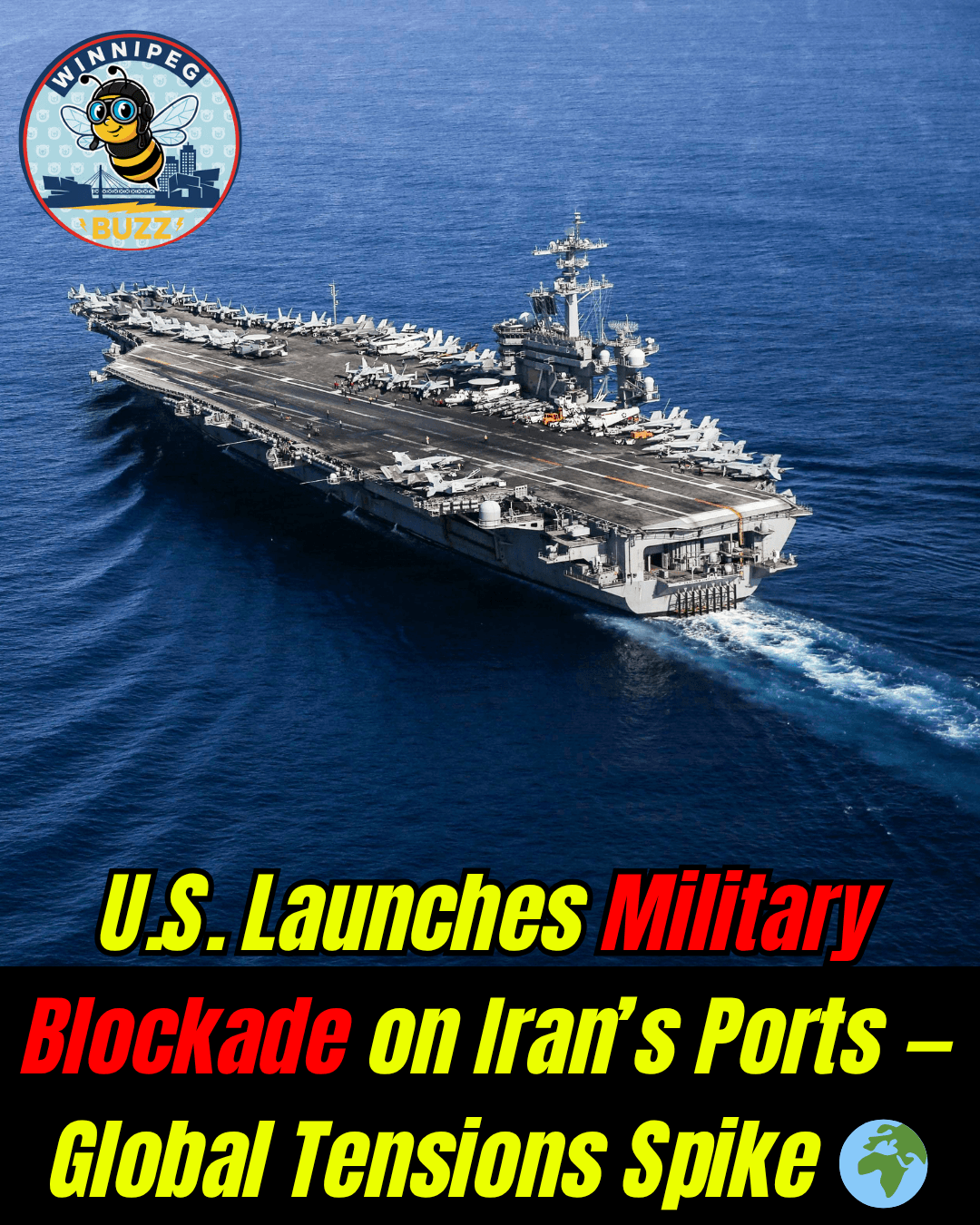
U.S. Military Blockade of Iran’s Ports Begins, Marking Major Escalation in Middle East Tensions
The United States has launched a military blockade on Iran’s ports, restricting maritime traffic and escalating tensions in the Middle East. The move follows failed diplomatic talks and raises global concerns over oil supply disruptions, economic impacts, and the risk of a broader conflict.
Rochelle Silver
A significant escalation in global geopolitical tensions unfolded Monday as the U.S. Central Command (CENTCOM) officially initiated a military blockade targeting Iran’s ports. The operation, which began at 10 a.m. Eastern Time, is aimed at restricting maritime access to and from Iranian territory, marking one of the most assertive moves by the United States in recent years.
According to officials, the blockade applies to all vessels attempting to enter or exit Iranian ports, regardless of their country of origin. The decision effectively isolates Iran’s maritime trade routes while maintaining limited access through key international waterways. Notably, transit through the Strait of Hormuz—a critical global shipping corridor—remains open for vessels not bound for Iran, in an apparent effort to avoid a complete disruption of international trade.
⚠️ Background to the Crisis
The move comes in the aftermath of collapsed diplomatic negotiations between the United States and Iran, which had aimed to de-escalate tensions surrounding nuclear development and regional security concerns. With talks failing to produce a breakthrough, Washington has opted for a more aggressive stance, signaling a shift from diplomacy to direct economic and military pressure.
Analysts suggest the blockade is intended to limit Iran’s economic activity, particularly its ability to export oil and other goods via sea routes. Iran, whose economy relies heavily on maritime trade, could face immediate financial strain as a result of these restrictions.
🌍 Global Economic Implications
The implications of this blockade extend far beyond the region. The Middle East plays a crucial role in global energy supply, and any disruption involving Iran—a key oil-producing nation—has the potential to send shockwaves through international markets.
Oil prices have already shown signs of volatility amid the announcement, with traders reacting to fears of reduced supply and heightened uncertainty. Economists warn that prolonged tensions could lead to rising fuel costs, inflationary pressure, and broader economic instability worldwide.
🚢 Strategic Importance of the Strait of Hormuz
Despite the blockade, the decision to keep the Strait of Hormuz open for non-Iran-bound traffic reflects a calculated approach. The narrow passage is one of the most vital shipping lanes globally, responsible for transporting a significant portion of the world’s oil supply.
A full closure of the strait would likely trigger an immediate global crisis. By keeping it accessible, the United States appears to be balancing pressure on Iran with an effort to prevent a total disruption of international commerce.
🔥 Rising Risk of Military Conflict
While the blockade stops short of a direct military strike, it significantly raises the risk of confrontation. Iran has historically responded strongly to restrictions on its trade and sovereignty, and any attempt to enforce the blockade could lead to naval incidents or further escalation.
Global leaders and international organizations are now closely monitoring the situation, urging restraint and a return to diplomatic dialogue. However, with both sides holding firm positions, the path forward remains uncertain.
🧭 What Happens Next?
The coming days will be critical in determining whether this move leads to renewed negotiations or deeper conflict. Much will depend on Iran’s response and the international community’s involvement in mediating the crisis.
For now, the blockade stands as a powerful signal of escalating tensions—one that could reshape geopolitical dynamics in the Middle East and beyond.