
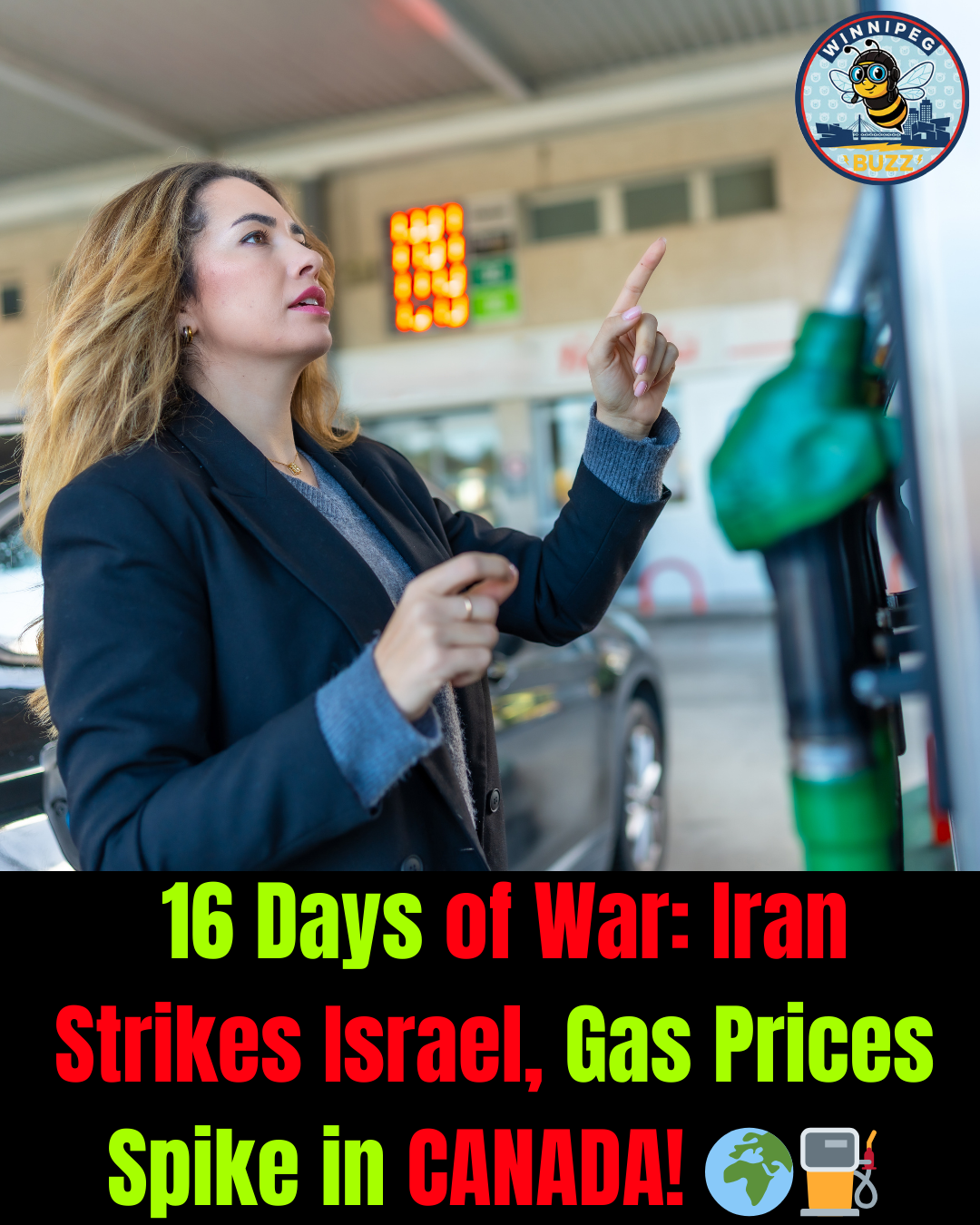
16 Days of Escalation: Iran Strikes Israel, Global Energy Markets Feel the Heat
The Iran–Israel conflict has entered its 16th day, with Iran launching long-range Sejjil missiles at Israel and U.S.-Israeli airstrikes targeting Iranian sites. Iran has arrested suspected spies, and regional tensions are rising as Iran-backed groups get involved. The war is already affecting global oil markets, pushing gas in Winnipeg to 155.9¢/L, and sparking fears of a wider Middle East crisis.
Rochelle Silver
The Middle East conflict between Iran and Israel has intensified, entering its 16th day with missile strikes, airstrikes, and growing regional tensions. On Saturday, Iran reportedly launched the advanced Sejjil ballistic missile, which has a range of approximately 2,000 km, targeting Israeli military and strategic sites. The missile launch marks one of the most significant escalations since the start of the conflict.
In response, Israel, backed by U.S. forces, has continued airstrikes on Iranian military infrastructure, targeting key locations across multiple provinces. Reports indicate that the strikes have focused on both military installations and logistical facilities, aiming to curb Iran’s ability to launch further attacks. Meanwhile, Iran’s authorities have arrested dozens of people accused of spying for Israel, signaling heightened internal security measures amidst the conflict.
The war is no longer confined to the two countries alone. Iran-backed groups, including Hezbollah, have reportedly joined in the fighting, firing rockets toward Israel and threatening to widen the conflict across the region. Gulf countries have also intercepted several Iranian missiles and drones, raising fears of a broader Middle Eastern war that could draw in multiple nations.
One of the most immediate global consequences of the conflict is its impact on oil markets. The Strait of Hormuz, a vital waterway through which nearly 20% of the world’s oil exports pass, is under threat from ongoing military activity. Disruptions in this key shipping route have already caused crude oil prices to surge, and local gas prices are rising in response. In Winnipeg, for example, gas prices have jumped to 155.9¢ per litre, reflecting the ripple effects of international tensions on Canadian consumers.
Global leaders are increasingly vocal in calling for restraint. Pope Leo has condemned the “atrocious violence” and urged an immediate ceasefire, while other international figures have warned of the humanitarian and economic fallout if the conflict continues. Analysts suggest that if the war extends, it could severely impact global energy supplies, trade routes, and regional stability, potentially pushing oil and gas prices even higher worldwide.
For residents in Canada and other oil-importing countries, the consequences are tangible. The rise in gas prices has sparked concerns over household budgets and inflation, highlighting how conflicts thousands of miles away can directly affect daily life. Economists warn that without diplomatic intervention or a ceasefire, the upward trend in energy costs could continue for weeks, putting additional strain on local economies.
As the war enters its third week, uncertainty remains high. The coming days are expected to be critical in determining whether the conflict will escalate further or if international pressure will lead to negotiations. For now, global eyes remain fixed on the region, with governments, markets, and citizens bracing for the potential fallout.
Bottom Line: The Iran–Israel conflict is more than a regional skirmish. With missile strikes, retaliatory airstrikes, and growing geopolitical tensions, the war is affecting energy prices, trade routes, and international security — and its consequences are being felt as far away as Canadian gas stations.