
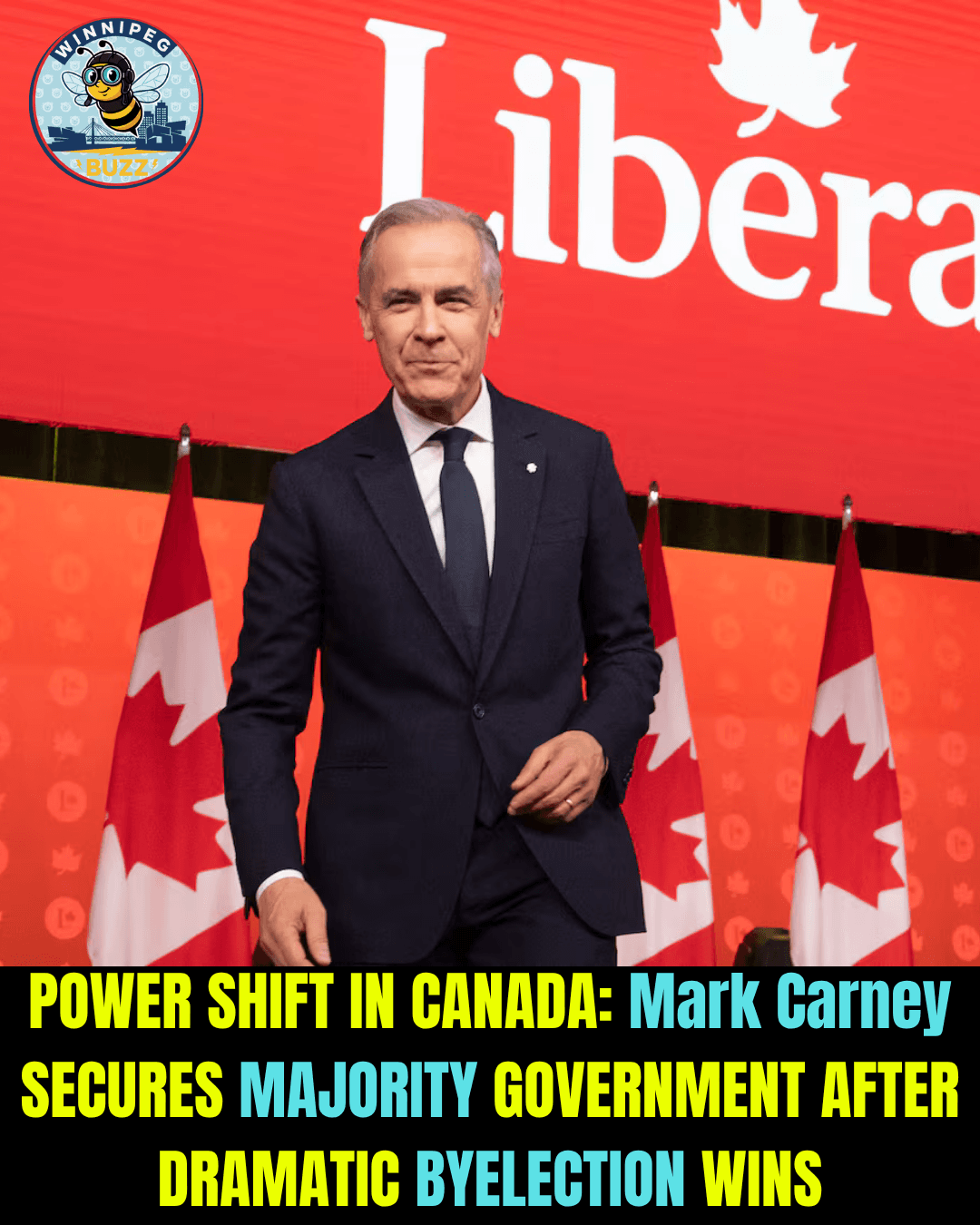
Mark Carney’s Liberals Secure Majority Government After Key Byelection Wins in Canada
Canada’s political landscape shifts dramatically as Prime Minister Mark Carney leads the Liberal Party to a majority government following crucial byelection victories, strengthening control in Parliament and reshaping national policy direction.
Rochelle Silver
Mark Carney’s Liberals Secure Majority Government After Byelection Breakthroughs
Canada has entered a new phase of political transformation as Prime Minister Mark Carney leads the Liberal Party to a confirmed majority government following a series of decisive byelection victories.
The results mark a significant shift in the balance of power in the House of Commons, giving the governing Liberals full legislative control and reducing their dependence on opposition parties to pass key bills and budgets.
📊 How the Majority Was Achieved
The Liberal Party’s path to majority status was built through multiple strategic byelection wins in key ridings across Canada. These victories pushed the party beyond the required threshold of 172 seats in the 343-seat House of Commons.
What makes this development particularly notable is the speed of the transition. Within a relatively short political period, the Liberals moved from a minority position to a stable majority, reshaping expectations for federal governance.
Political observers also point to a combination of factors contributing to this outcome, including:
- Strong byelection performances in urban and suburban ridings
- Strategic campaigning focused on economic stability and governance
- Shifts in voter sentiment in closely contested districts
- Parliamentary realignments and support consolidation
🏛️ What a Majority Government Means for Canada
With a majority government now in place, the Liberals gain significant parliamentary advantages:
- ✔️ Ability to pass legislation without opposition support
- ✔️ Greater control over the federal budget and spending priorities
- ✔️ Reduced risk of confidence votes triggering an early election
- ✔️ More predictable policy direction over the coming years
This shift is expected to bring a period of political stability, allowing the government to implement its agenda with fewer procedural obstacles.
⚖️ Political Reactions and National Impact
The development has triggered strong reactions across the political spectrum. Supporters argue that a majority government will provide Canada with stability during a time of global economic and geopolitical uncertainty.
Critics, however, warn that concentrated political power may reduce parliamentary scrutiny and limit opposition influence on major decisions.
Analysts suggest this majority could shape several key policy areas, including:
- Economic reform and inflation management
- Healthcare funding and provincial transfers
- Energy and climate strategy
- Immigration and labor policy
🌍 Why This Moment Matters
This political milestone is being viewed as one of the most significant shifts in recent Canadian federal politics. It reflects changing voter priorities and a renewed focus on leadership stability at the national level.
It also positions the Liberal government to govern with greater confidence heading into future policy cycles, potentially influencing Canada’s domestic and international direction for years ahead.
🧠 Final Outlook
As Canada adjusts to this new political reality, attention now turns to how the Liberal government will use its majority mandate.
Will this lead to stronger governance and economic progress, or will it raise concerns about reduced political balance in Parliament?
One thing is certain — Canada’s political landscape has just entered a defining new chapter.