Manitoba Cuts Ties With Teacher Misconduct Investigator After Florida Remote Work Revelation
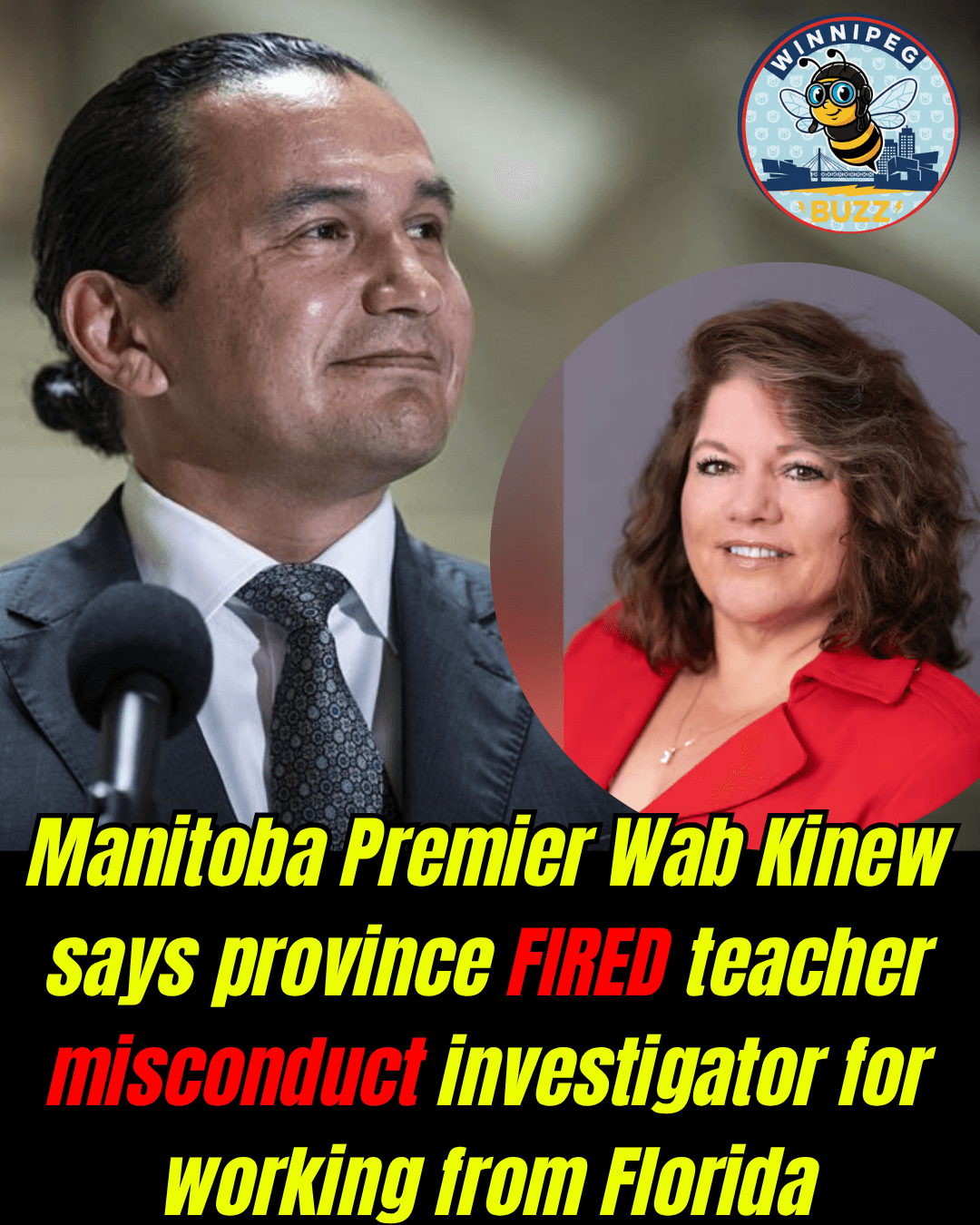
Manitoba government has fired the official responsible for teacher misconduct investigations after it was revealed she was working remotely from Florida, raising concerns about oversight, accountability, and public trust in education governance.
Rochelle Silver
The Manitoba government has confirmed it has terminated the employment of the senior official responsible for overseeing teacher misconduct investigations, following revelations that the individual had been working remotely from Florida while holding a critical public safety role in the province’s education system.
The decision has sparked widespread discussion across Manitoba about accountability, transparency, and the expectations placed on individuals in sensitive government positions.
Government Confirms Termination
Manitoba Premier Wab Kinew confirmed that the province has cut ties with the official, clarifying that earlier statements describing the departure as a resignation were incorrect.
The Premier emphasized that the province took immediate action once the full situation became clear, stating that roles involving student safety and teacher discipline require a strong and consistent presence within Manitoba.
According to the government, the decision to terminate the individual was based on concerns that the working arrangement did not meet the expectations for such a high-responsibility position.
Remote Work Raises Oversight Questions
The controversy began when it was revealed that the person responsible for managing teacher misconduct investigations and disciplinary processes had been working remotely from Florida.
This discovery raised immediate concerns within the education sector and the public, as the role involves making or overseeing decisions that can directly affect whether educators are allowed to remain in classrooms with children.
Officials within the Education Ministry indicated that they only became aware of the remote work arrangement after media inquiries brought the situation forward, prompting questions about internal oversight mechanisms and communication gaps within the system.
Why the Role Matters
The position at the centre of the controversy is considered highly sensitive. It involves reviewing complaints, investigating allegations of professional misconduct, and ensuring that appropriate disciplinary actions are taken when necessary.
Given the nature of the job, critics argue that physical presence in the province is essential to maintain transparency, accountability, and responsiveness.
Premier Kinew addressed this concern directly, stating that individuals in such roles must be fully accessible and engaged within Manitoba, especially when decisions impact the safety and well-being of students.
Public Reaction and Debate
The situation has triggered a wider public debate in Manitoba regarding remote work policies in government roles, particularly those tied to public safety and education.
Some residents have questioned how the arrangement went unnoticed for an extended period, while others are calling for stricter policies and clearer guidelines regarding where senior officials in sensitive positions are allowed to work from.
Others have raised broader questions about modern workplace flexibility, arguing that remote work is increasingly common—but may not be suitable for roles requiring direct accountability and frequent in-person coordination.
Government Review Underway
In response to the controversy, the province has indicated it will review internal oversight procedures related to senior administrative positions.
The goal, according to officials, is to ensure that expectations are clearly defined and that similar situations do not occur in the future.
This includes examining how employment arrangements are monitored and ensuring that reporting structures are strong enough to flag concerns early.
Conclusion
The firing of the teacher misconduct investigator has become more than just an employment issue—it has evolved into a broader conversation about governance, trust, and the balance between remote work and public responsibility.
As the province continues its review, Manitobans are left questioning how such an arrangement was approved in the first place and what safeguards will be introduced to prevent similar situations going forward.
For now, the government maintains that the decision was necessary to uphold confidence in the education oversight system and ensure accountability in roles that directly affect student safety across the province.