Fired or Resigned? Dispute Between Manitoba Government and Former Teacher Commissioner Raises Questions Over Remote Work and Transparency
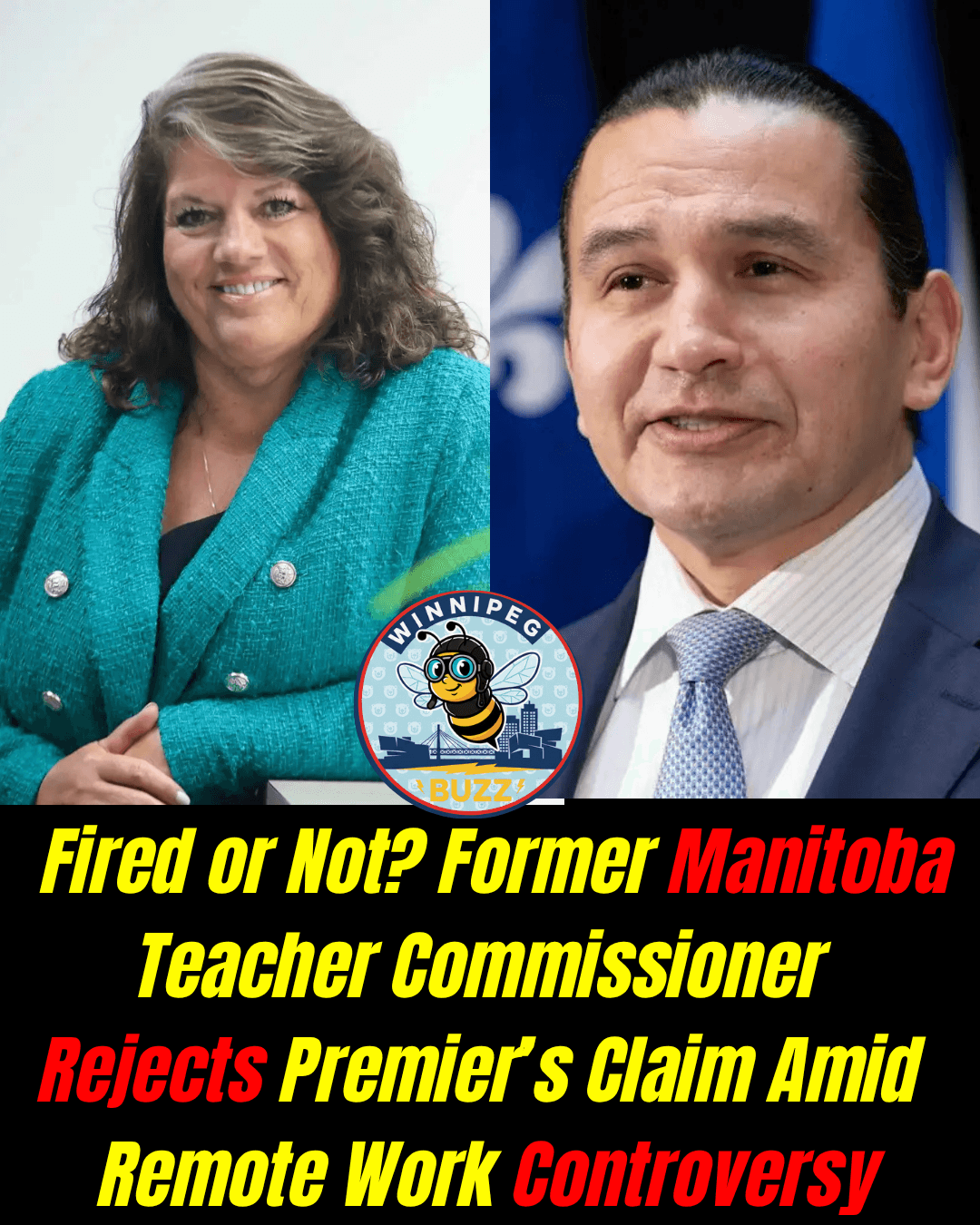
A public dispute has emerged between Manitoba officials and former teacher misconduct commissioner Bobbi Taillefer, after conflicting claims over whether she was fired or resigned amid allegations involving remote work from the United States.
Rochelle Silver
A growing controversy is unfolding in Manitoba after conflicting statements emerged between the provincial government and the former teacher misconduct commissioner, Bobbi Taillefer. At the center of the dispute are serious questions about whether she was fired or resigned—and whether remote work from outside Canada played a role in her departure.
Premier Wab Kinew has stated that Taillefer was dismissed from her position after it was discovered she had been performing her duties while located in Florida, United States. According to the premier, the nature of the commissioner’s role required physical presence within Manitoba due to the sensitivity of overseeing teacher misconduct investigations, which often involve confidential information and public trust.
However, Taillefer strongly disputes this version of events. She has publicly rejected the claim that she was fired, describing it as inaccurate. Instead, she maintains that the provincial government was aware of her remote work arrangement and that her departure from the position was a resignation rather than a dismissal. Her response has added a new layer of complexity to an already politically sensitive issue.
The conflicting accounts have sparked widespread debate, particularly around transparency in government communication and workplace expectations for senior public officials. Earlier public messaging around her departure appeared inconsistent, with initial reports suggesting a resignation before later statements clarified it as a firing. This shift has contributed to public confusion and increased scrutiny.
At the heart of the matter is the broader question of remote work policies within government-appointed positions. While remote work has become more common across many sectors in recent years, high-level roles involving public trust, legal oversight, and sensitive investigations often come with stricter requirements regarding physical presence and jurisdiction.
Supporters of the government’s position argue that roles like the teacher misconduct commissioner must remain fully accessible within the province to ensure accountability and proper oversight. Critics, however, say the situation raises concerns about whether expectations were clearly communicated and consistently enforced.
In response to the situation, the Manitoba government has already appointed an interim commissioner to ensure that ongoing investigations into teacher misconduct continue without interruption. Officials have emphasized that the transition will not affect the handling of complaints or the integrity of the system.
Despite this assurance, the political and public debate continues to grow. Questions remain about how the situation was managed internally, whether policies around remote work were clearly defined, and how such discrepancies in official statements occurred.
As both sides maintain their positions—one insisting on dismissal due to policy concerns, the other rejecting that claim entirely—the issue has evolved into a broader discussion about governance, accountability, and modern workplace flexibility in the public sector.
For now, the truth behind the departure remains contested, and the situation continues to draw attention from both the public and political observers across Manitoba.